If you are shopping for a waterfront lot on Anna Maria Island, the word waterfront only tells you so much. Two properties can both touch the water and still offer very different views, building options, flood considerations, and boating potential. When you know what to evaluate before you make an offer, you can avoid surprises and focus on a lot that truly fits your goals. Let’s dive in.
Why lot evaluation matters here
Anna Maria Island is a low-lying barrier island in Manatee County, bounded by the Gulf, Anna Maria Sound, Tampa Bay, and Longboat Pass. That geography shapes how a parcel functions, from its frontage and view corridor to its permitting path.
For you as a buyer, that means the side of the island matters, and so does the municipality. A waterfront lot in Anna Maria, Holmes Beach, or Bradenton Beach may look similar at first glance, but local rules can create very different outcomes.
Start with the water frontage
Not all waterfront exposure delivers the same experience. A lot may front the Gulf, a canal, the bay, or another water body, and each one can affect your view, privacy, and future plans.
You also want to look beyond the listing description. The real question is how open the view corridor will remain once you account for lot shape, neighboring homes, setbacks, easements, and local review standards.
View corridors are part of planning
In Anna Maria, site-plan review looks at factors such as building size, mass, bulk, height, orientation, lot coverage, setbacks, screening, buffers, and lighting. That means your future view envelope is not just about what you see today. It can also be shaped by what the lot allows and how a future home is reviewed.
Lot shape can limit flexibility
A waterfront parcel may sound generous on paper, but the buildable portion can narrow quickly. Irregular shapes, shallow depth, and easement locations can all reduce the usable area for the home, pool, outdoor space, or parking layout you have in mind.
Confirm where the buildable area begins
One of the biggest mistakes buyers make is assuming the buildable area starts where the grass or seawall appears to begin. On Anna Maria Island, waterfront setbacks are often tied to the mean high-water line or retaining wall, depending on the municipality.
In Anna Maria, the waterfront setback is measured from the mean high-water line or retaining wall, whichever is closer to the lot. Holmes Beach and Bradenton Beach also tie waterfront or canal setbacks to the mean high-water line in their codes.
Why a survey is essential
Because setback measurements depend on legal and physical site conditions, a current survey is a must. Without one, it is difficult to know exactly where the buildable footprint starts or how much room you truly have.
This is especially important if you are comparing lots for new construction, a major renovation, or a custom waterfront design. A parcel that looks wide open during a showing may have a much tighter envelope once surveyed.
Expect tighter waterfront envelopes
Waterfront lots on Anna Maria Island often have more constraints than buyers expect. Height limits, waterfront setbacks, and impervious-surface caps can all reduce what fits on the site.
One Anna Maria zoning excerpt shows a 37-foot maximum height, a 15-foot waterfront setback, and a 40 percent impervious-surface cap. A Holmes Beach district excerpt shows a 20-foot waterfront setback and a 50-foot setback from the erosion control line at Gulf-front locations.
Rules vary by parcel
These examples are not one-size-fits-all rules for every property. They do show how quickly available space can shrink once zoning and waterfront standards are applied.
If you are weighing lifestyle and income potential, this matters. A tighter envelope can affect the home size, outdoor living area, parking design, or whether a rebuild matches your expectations.
Boat access and dockability are different
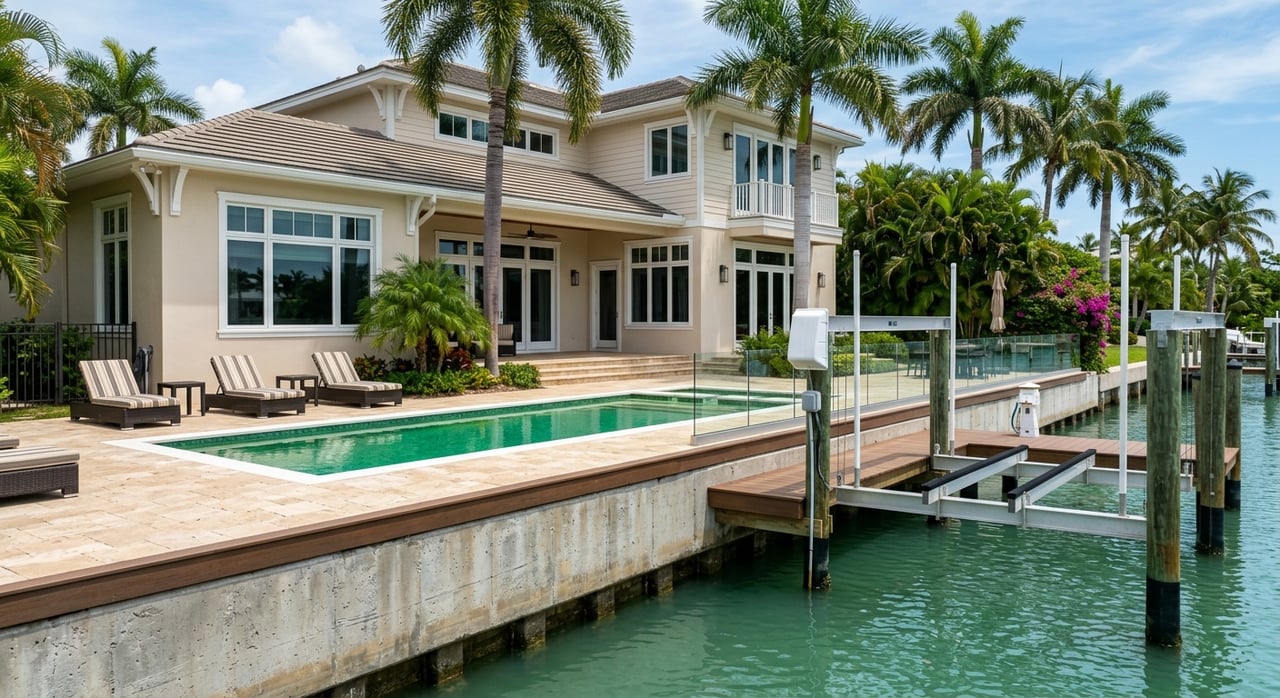
A lot can be waterfront without being an easy boating property. On Anna Maria Island, dockability depends on more than frontage.
Depth, channel geometry, seagrass impacts, and local dock rules all come into play. If boating is part of your plan, you need to evaluate whether the lot can support the dock, lift, and vessel use you actually want.
Holmes Beach dock rules matter
Holmes Beach states that a boat docking facility plus a moored vessel may not protrude more than 20 feet into the waterway from the seawall or mean high-water line. The city also ties maximum main access dock length to the minimum water depth needed at low tide and seagrass clearance, up to 60 feet unless otherwise permitted by the Florida Department of Environmental Protection.
Holmes Beach also states that no docking facilities extending into the Gulf are permitted. That makes it important to separate a beautiful water view from a truly functional boating setup.
Bradenton Beach requires layered approvals
In Bradenton Beach, dock or pier construction or expansion requires development-plan approval. The city also requires authorization from the Army Corps of Engineers and the Florida Department of Environmental Protection before a building permit is issued.
Its code says owner docks and piers are limited to 500 square feet unless a larger project is approved through a special permit and public hearings. Docks, piers, and boat lifts must remain within the applicant’s riparian rights area and stay at least 10 feet from the riparian rights line established by a licensed Florida surveyor.
Ask practical boating questions
If you want a canal or bayfront lot, ask specific questions early:
- Can the intended dock be approved on this exact parcel?
- Can a lift work within local protrusion and setback limits?
- Is there adequate depth for your intended vessel at low tide?
- Are seagrass conditions likely to affect the design?
- Are riparian-rights lines clearly established?
Know which municipality controls the lot
Anna Maria Island includes three municipalities, and each keeps its own code structure and review process. Before you price a build or renovation, confirm whether the parcel is in Anna Maria, Holmes Beach, or Bradenton Beach.
That step sounds basic, but it can shape almost everything that follows. Waterfront rules, site-plan review, hearing requirements, and dock standards can all vary from city to city.
Anna Maria review standards
Anna Maria’s code includes separate chapters for floods, historic preservation, waterways, and zoning. Its site-plan rules require a current survey and a professionally prepared site plan showing footprints, setback lines, zoning district, abutting properties, rights-of-way, easements, and stormwater mitigation features.
The city also reviews compatibility with surrounding land uses, including size, mass, bulk, height, orientation, lot coverage, setbacks, buffers, and natural features such as dunes and watercourses. For buyers considering new construction, that is a key part of due diligence.
Holmes Beach process
Holmes Beach also maintains separate waterways and land-development rules. The city commission may hold a public hearing on site-plan reviews that are not waived or handled administratively.
For waterfront buyers, Holmes Beach is a strong example of why entitlement and waterfront use are not the same thing. A lot may allow a home, but that does not automatically mean it allows your preferred dock setup.
Bradenton Beach process
Bradenton Beach keeps its own land development code and waterways chapter as well. For larger projects, the city requires a site plan and architect’s renderings, sends notice to owners within 500 feet, posts the application on the property, and keeps the approved site plan on file before construction moves forward.
That level of process can affect timeline, design, and carrying costs. It is better to know that up front than after you are under contract.
Gulf-front lots need extra attention
If you are evaluating a Gulf-front parcel, state coastal permitting can become part of the picture. Florida’s Coastal Construction Control Line program regulates structures and activities that can cause beach erosion, destabilize dunes, damage upland property, or interfere with public access.
Florida law also states that special siting and design considerations apply seaward of established Coastal Construction Control Line areas, and construction seaward of the line is prohibited except as provided by law. For you, that means Gulf-front due diligence may involve an added layer beyond local zoning.
Check flood risk early
Flood review should happen at the start of your lot analysis, not after you fall in love with the property. Manatee County offers parcel-level flood-risk lookups by address or parcel ID, including flood zone and base flood elevation.
The county can also provide elevation certificates and related flood documents if they exist. Those records can help you understand not only current conditions, but also what a future build or renovation might involve.
High-risk zones can change the conversation
Manatee County notes that flood zones starting with A or V are high-risk zones, and flood insurance is typically required. It also notes that if a structure in a Special Flood Hazard Area was started after January 1, 1975, an elevation certificate was required to verify the lowest habitable floor.
For buyers comparing lots, this can affect design planning, insurance expectations, and renovation strategy. It can also influence whether a property feels turnkey or more complex.
Renovation buyers should watch the 50 percent rule
This topic is not just for teardown lots. If you are buying an older waterfront home with plans to remodel, Manatee County’s substantial-improvement rules matter.
The county defines substantial improvement as reconstruction, addition, repair, rehabilitation, alteration, or other improvement during a one-year period that equals or exceeds 50 percent of the market value of the building before the work starts. It defines substantial damage the same way for storm-damaged properties.
Why this matters before you buy
Once a project crosses that threshold, the permitting and elevation discussion can change significantly. That can alter your budget, your timeline, and even whether your original renovation plan still makes sense.
If you are buying for personal use, seasonal use, or future rental income, this is one of the most important numbers to clarify early.
Build your due diligence team
Waterfront lot evaluation is rarely a solo exercise. Local requirements on Anna Maria Island make licensed professionals an important part of the process.
Anna Maria requires a current survey and formally submitted site plans prepared by a professional engineer, registered architect, licensed surveyor, or other properly licensed professional. Bradenton Beach requires riparian-rights lines to be established by a licensed Florida surveyor for dock and pier setbacks.
Who often belongs in the process
Depending on the parcel, your due diligence may include:
- A licensed Florida surveyor
- A local builder
- A registered architect or engineer
- A coastal or marine specialist for Gulf-front or shoreline work
The right team can help you test whether your vision fits the site before you commit.
A smart waterfront lot checklist
Before you make an offer, try to answer these questions:
- Which municipality governs the parcel?
- What water body does the lot actually front?
- Where does the legal waterfront setback begin?
- What is the current flood zone and base flood elevation?
- Is there an elevation certificate on file if a structure exists?
- Can the intended dock, lift, seawall, or boat setup be approved?
- Could a planned renovation trigger substantial-improvement rules?
- Will the project require site-plan review, neighbor notice, or a public hearing?
The bottom line for Anna Maria Island buyers
On Anna Maria Island, the best waterfront lot is not always the one with the boldest listing language. It is the one where the view, buildability, flood profile, and waterfront use all line up with the way you want to own and enjoy the property.
That is where local guidance makes a real difference. Whether you are searching for a luxury homesite, a canal-front boating property, or a lot with long-term lifestyle and rental appeal, a careful review now can save time, money, and stress later.
If you want help evaluating waterfront opportunities on the island, connect with Jessica Batten for practical local insight and a clear path forward.
FAQs
What should you check first on a waterfront lot on Anna Maria Island?
- Start by confirming which municipality controls the parcel, what water body it fronts, and where the legal waterfront setback begins.
Why is a survey important for Anna Maria Island waterfront lots?
- A current survey helps show where setback lines apply, how much buildable area exists, and whether features like riparian-rights lines or easements affect your plans.
Can every canal-front lot on Anna Maria Island have a dock?
- No. Dockability depends on local rules, water depth, seagrass conditions, channel geometry, and permitting requirements for that specific lot.
Do Gulf-front lots on Anna Maria Island have extra rules?
- Yes. Gulf-front parcels may also be subject to Florida’s Coastal Construction Control Line requirements, which can affect siting, design, and permitting.
How do flood zones affect a waterfront lot purchase in Manatee County?
- Flood zones can affect insurance needs, elevation planning, and the overall feasibility of building or renovating, especially in high-risk A or V zones.
What is substantial improvement for a waterfront property in Manatee County?
- Manatee County defines substantial improvement as work during a one-year period that equals or exceeds 50 percent of the building’s market value before the work begins.
Why do municipal rules matter for Anna Maria Island waterfront buyers?
- Anna Maria, Holmes Beach, and Bradenton Beach each have their own codes and review processes, so zoning, dock rules, and approval timelines can vary from one parcel to another.